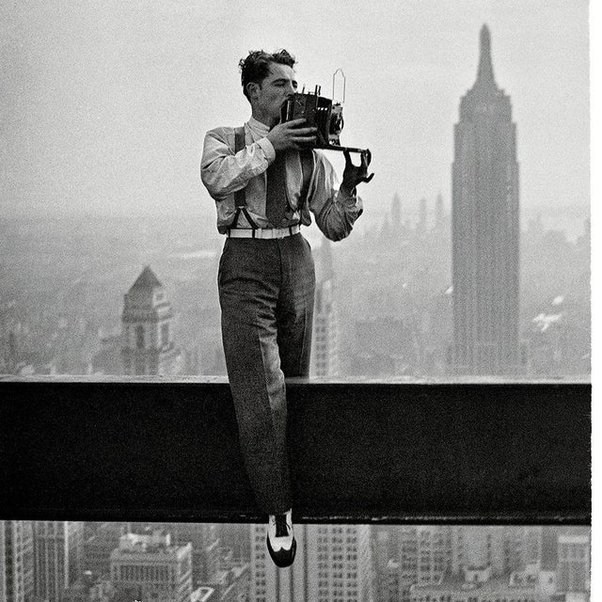
Lockheed HR F2 camera system
Lockheed is a famous US company that builds missiles, warplanes and spacecrafts. There was a requirement to take 35mm photos of targets from carriers (planes, helicopters, vehicles etc), but human hand and carrier movements and vibrations significantly smeared the image on the film plane and hence high resolution (HR = over 200 lines per mm) photos could not be obtained using standard cameras. Lockheed did the following to solve this problem :
1) Build an HR camera by ‘accurizing’ the camera and lenses to obtain lens to film distance accuracy to within 1/1000th of an inch (1/32th of a mm)
2) Fix the shutter speed to 1/1000s, to minimise image smear
3) Lock the mirror up to eliminate its bounce vibrations
4) Fix the lens to open aperture, as high resolution films are slow
5) Attach a sighting scope to frame and follow targets, when the mirror is locked up
These first 5 steps were still insufficient to fully counter carrier vibrations, and produce HR images. An automatic and intelligent vibration reduction or compensation mechanism was needed, but it was technically impossible to achieve at that time. Lockheed found that humans naturally compensate vibrations from the body to the brain, but the compensation is not always perfect. However, if an operator holds a camera at head level and fires many successive frames very quickly on a target, then some frames would be high resolution. Hence Lockheed did the following :
6) Add a motor drive, and set it to its maximum rate
7) Instruct the operator to hold the camera at eye level and continuously shoot about 10 frames per target
8) Add a bulk film back, to allow longer shooting sessions without changing cassettes
9) Instruct the operator to note down the lighting conditions, so the film processing lab can vary chemicals and development times to compensate the fixed exposures